8 Reasons NOT to Buy the £27 Shoulder Cream That's Making Hundreds of Pounds of Massage and Physio Look Useless
(Unless you enjoy paying £50 a session for relief that's gone by Tuesday.)


I wasn't going to write this one up — but after the third patient this month put the same jar on my desk, I decided someone should give you the honest reasons not to buy it. All eight of them.
Reason #1"I've tried everything — why would this be any different?"
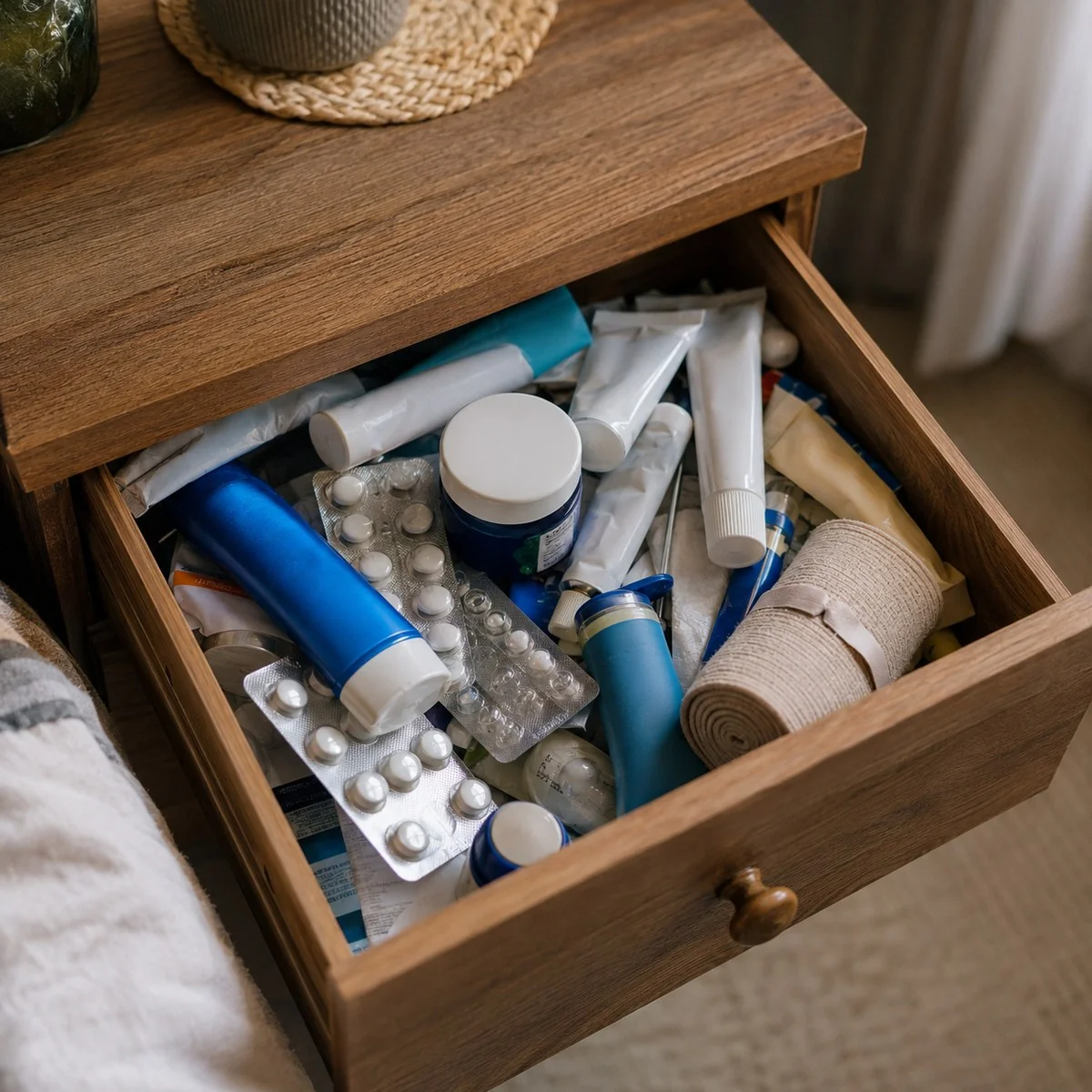
You've earned that scepticism. If you're like most people I see, you've already been through the lot: the sports massage that felt wonderful for about an hour. The physio at £50 a session, and the rotator cuff exercises with the stretchy band you were sent home with. The massage gun for Christmas, the "orthopaedic" pillow. The Voltarol, the Deep Heat, the ibuprofen and the naproxen your GP kept topping up. And here you are, still reading — because none of it ever actually held.
There's a reason for that, and it isn't you. Hands can loosen the muscle for an hour, but they can't stop it clamping back the moment you're out of the room. The creams work on the surface and wear off by lunchtime. The painkillers work on your whole body and just mask the signal. Not one of them ever reached the thing that's actually causing it.
Your shoulder pain isn't in your skin — and it isn't really in those pills' hands either. It's a muscle clamped deep between your shoulder and your shoulder blade, pressing on the nerve that runs down your arm (more on that in a minute). This one isn't built to sit on top and fade, or to knock you out from the inside. It's built to get down to that muscle, and give the nerve the one thing it needs to let go. You feel the cooling in about two minutes; the real work happens underneath it.
So if you're happy booking another £50 hour that wears off before the weekend — or swallowing another painkiller that fogs your head — don't buy this one.
Reason #2"Why is it any better than the massage and physio I'm already paying for?"

This is the one your physio won't love. Because side by side, it isn't close:
Massage, physio & painkillers
- ✕£40–£60 a session, over and over
- ✕Hands loosen it — for about an hour
- ✕Exercises pull on a muscle already in spasm
- ✕Painkillers only mask it — fog, dodgy stomach
- ✕Nothing reaches the muscle once you leave the room
This cream
- ✓£27.90 once — then it's yours every night
- ✓Works on the exact spot, at home
- ✓Calms it at the source — no fighting the muscle
- ✓No side effects — you just rub it on
- ✓Straight through skin to the muscle — and it holds
A massage works on the muscle from the outside for an hour. A painkiller quietens your whole nervous system and hopes your shoulder goes quiet with it. This does one thing, in one place — and it's still doing it at 3am, when the physio's closed. That's the whole difference.
Reason #3"Alright then — so what's ACTUALLY causing my shoulder pain?"
Here's the part no painkiller ever tells you, because a pill can't fix it anyway.
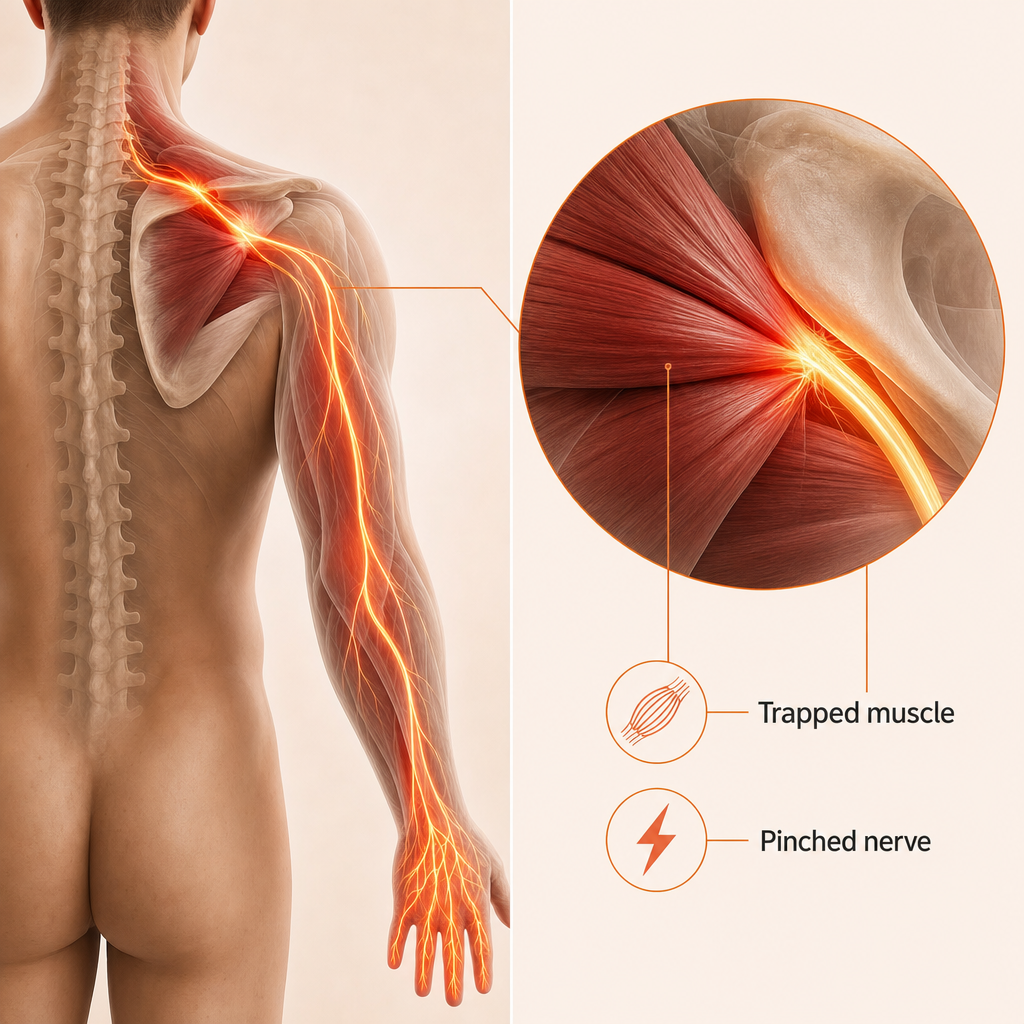
Deep in your shoulder — between the top of the shoulder and the shoulder blade — there's a muscle that's clenched. And it has stayed clenched. A muscle can't relax on its own; it only lets go when the nerve sends it the "release" signal. And the nerve builds that signal out of one mineral: magnesium.
Run low on magnesium — and after 40, most of us are — and that signal never fires. The muscle stays gripped, 24 hours a day. And that gripped muscle sits right on top of the nerve that runs from your shoulder down your arm, strangling it. That's the deep ache in your shoulder blade. That's why you can't lie on that side at night. And that's the tingling that reaches your fingers — the pins and needles are in your hand, but the problem never was.
It's not your rotator cuff "wearing out". It's not "just your age". It's not permanent. It's a muscle that can't let go — waiting for a signal it hasn't got the magnesium to send.
Reason #4"So I just… rub it on? That sounds far too simple to work."
It does. And here's the honest catch that trips everyone up: if it's a magnesium problem, why not just swallow a magnesium tablet?
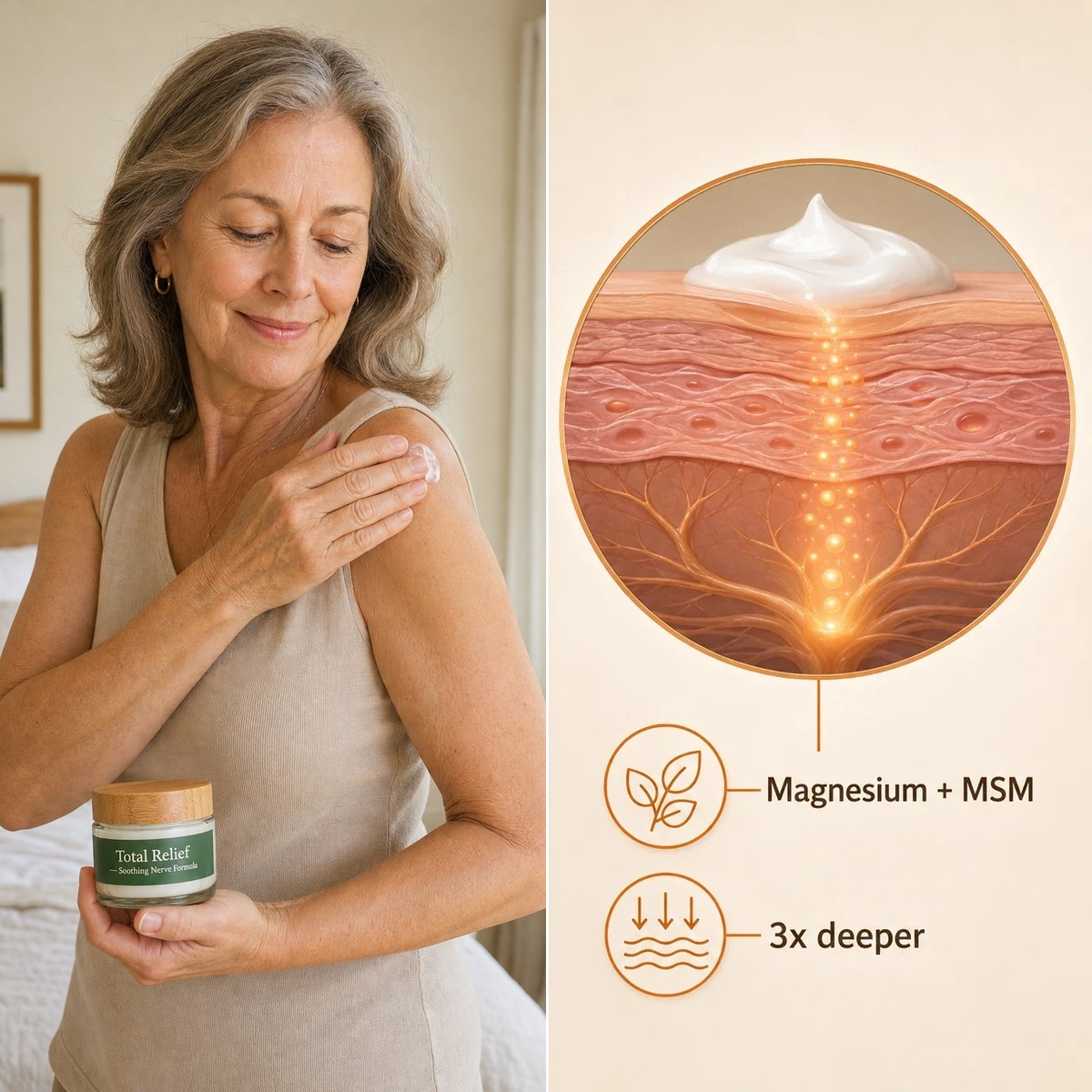
Because swallowed magnesium gets lost in your gut long before it reaches that muscle — and the cheap "Epsom" creams use a magnesium molecule far too big to pass through skin. They sit on top and do nothing. That's why they failed you.
This one uses pharma-grade magnesium chloride, carried by MSM — which shrinks it fine enough to actually absorb, up to three times deeper — plus Arnica to calm the area and Vitamin B6 to help the nerve fire its signal again. You put it exactly where it hurts. It gets to where the tablet never could.
Reason #5"Fine — but won't it just wear off and come back, like everything else has?"

Honest answer: everything else wears off because everything else only masks. The second the menthol fades — or the pill leaves your system — the muscle is still gripped, so the ache is still waiting for you. You're not treating it. You're renting twenty minutes of quiet.
This works the other way round. Used on the spot each night, you're topping the nerve back up with the magnesium it needs to send the "release" signal — so the muscle can finally let go, and stay let go.
It's the same reason the exercises never held, by the way: you can't stretch a muscle into releasing when it's in a protective spasm — pull on it and it grips back harder. You have to give the nerve its signal, not fight the muscle.
That's the difference between "a bit of relief" and reaching the top shelf — or sleeping on that side again — without thinking about it.
Reason #6"Never heard of it. And who are you, exactly?"

Also fair. You've no reason to trust me yet, and the brand's new to you too. So don't take my word — take theirs:
- Rated 4.6★ from 12,000+ reviews
- Over 90,000 jars posted out since launch
- +3,800 ordered in the last 30 days
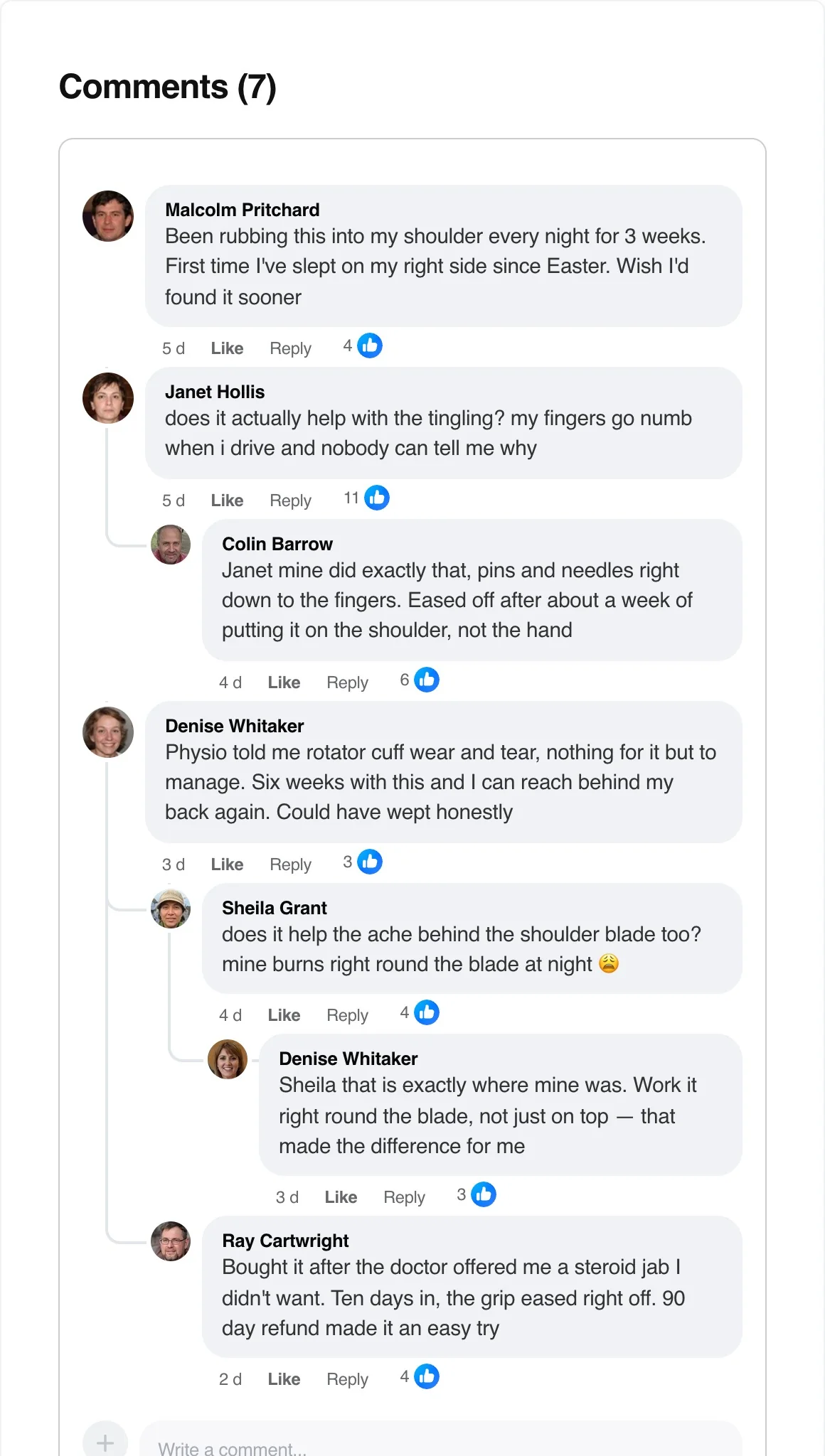
Here's what people are actually saying:
And me? I've spent twenty years watching people cycle through everything on this list before they reach the thing that finally works. Nobody pays me to say this — I just got tired of repeat prescriptions that only ever masked it.
Reason #7"And if I only want to try it — with no risk to me?"

Then it's almost annoyingly low-risk — which is the last reason your chemist won't like it.
Here's the deal you're covered by:
- 90-day money-back guarantee — use the whole jar. If your shoulder doesn't calm down, you email them and get every £ back. Not the unused bit. All of it.
- Free UK shipping with 2 jars.
- Currently 50% off while the launch stock lasts.
You're covered by the same consumer-protection rules as any UK purchase — so the only thing you can actually lose here is the pain.
Reason #8"Where's it made — and where does it ship from?"
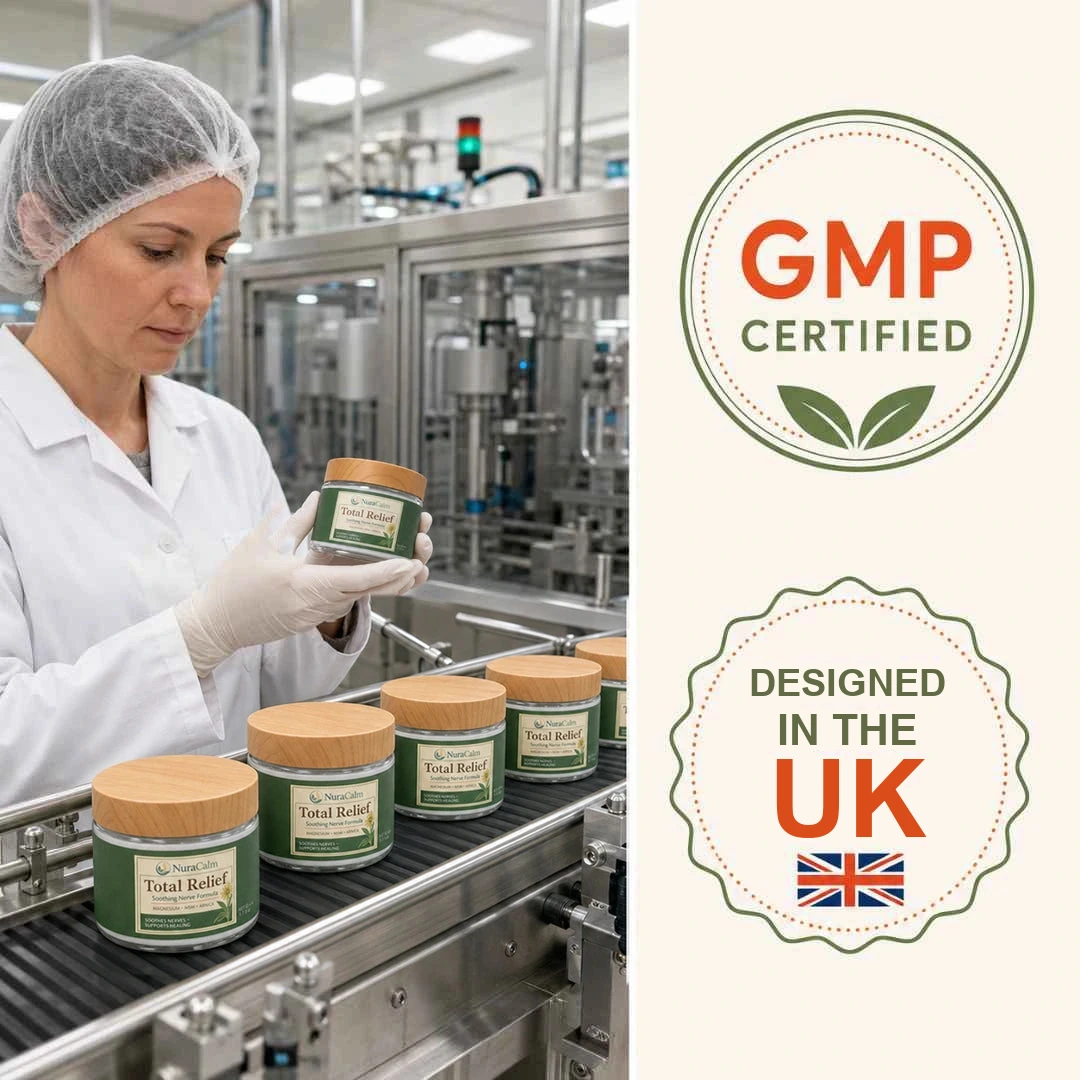
Straight answers, because you asked:
- Made in a regulated, GMP-registered facility — not a kitchen-table job.
- The formula's been refined over the past 5 years, and every batch is tested before it's boxed.
- Shipped from a UK-based fulfilment centre.
Nothing exotic, nothing to hide. Just a small team that got tired of the same two menthol creams and built something that actually reaches the muscle.
A few things people ask me privately
"I've genuinely tried everything — will this be any different?"
If nothing you've tried actually went after that clamped muscle in your shoulder, then yes — it's doing a different job. And you've got 90 days to prove me wrong.
"Is it greasy, does it stink of menthol?"
Light cooling, not overpowering. Sinks in — no oily patch on your shirt or your pillow.
"I'll be honest, the price put me off at first…"
Then the 50% off and the 90-day guarantee did it. Worked out cheaper than the month of pills I was on.
"How fast will I feel anything?"
Cooling in a couple of minutes. The real calming builds over the first week or two of using it nightly.
"Do I have to keep buying it forever?"
No autoship trap. Buy it once, see for yourself. Most people just keep one in the drawer for flare-ups.
